
Summary
Bitcoin mining has evolved from a purely extractive industry to an innovative energy solution. Modern mining operations are transforming “waste” heat into valuable resources, powering homes, greenhouses, and district heating systems. This comprehensive guide explores Bitcoin mining fundamentals, equipment selection, and cutting-edge heat recovery technologies that turn mining rigs from energy consumers into dual-purpose machines generating both cryptocurrency and usable thermal energy. As Bitcoin trades around $102,000 in November 2025, profitable mining requires strategic planning, efficient hardware, and innovative thermal management solutions.
Understanding Bitcoin Mining Fundamentals
What is Bitcoin Mining?
Bitcoin mining is the computational process that secures the Bitcoin network through proof-of-work consensus. Miners compete to solve cryptographic puzzles by performing trillions of hash calculations per second. The first miner to find a valid solution adds a new block to the blockchain and receives 3.125 BTC (as of 2025) plus transaction fees. This process requires approximately 464 sextillion calculations to achieve the correct hash with sufficient leading zeros.
Mining Methods Comparison
Three primary mining approaches dominate the industry: solo mining offers complete control and full block rewards but requires substantial computational power with unpredictable returns. Pool mining combines resources from multiple miners, providing consistent smaller payouts distributed by contribution. Cloud mining eliminates hardware ownership through leased hash power, though profitability depends heavily on contract terms and provider reliability.
Energy Consumption Reality
Bitcoin mining consumed approximately 173 TWh annually in 2025, drawing around 10 GW of continuous power globally. However, renewable energy adoption has surged to 58.9% of total mining operations, up from 36.8% in 2020. The industry increasingly utilizes stranded energy sources, including flared natural gas, excess hydroelectric capacity, and curtailed renewable power that would otherwise be wasted.
Essential Mining Equipment and Setup
ASIC Miners: The Professional Standard
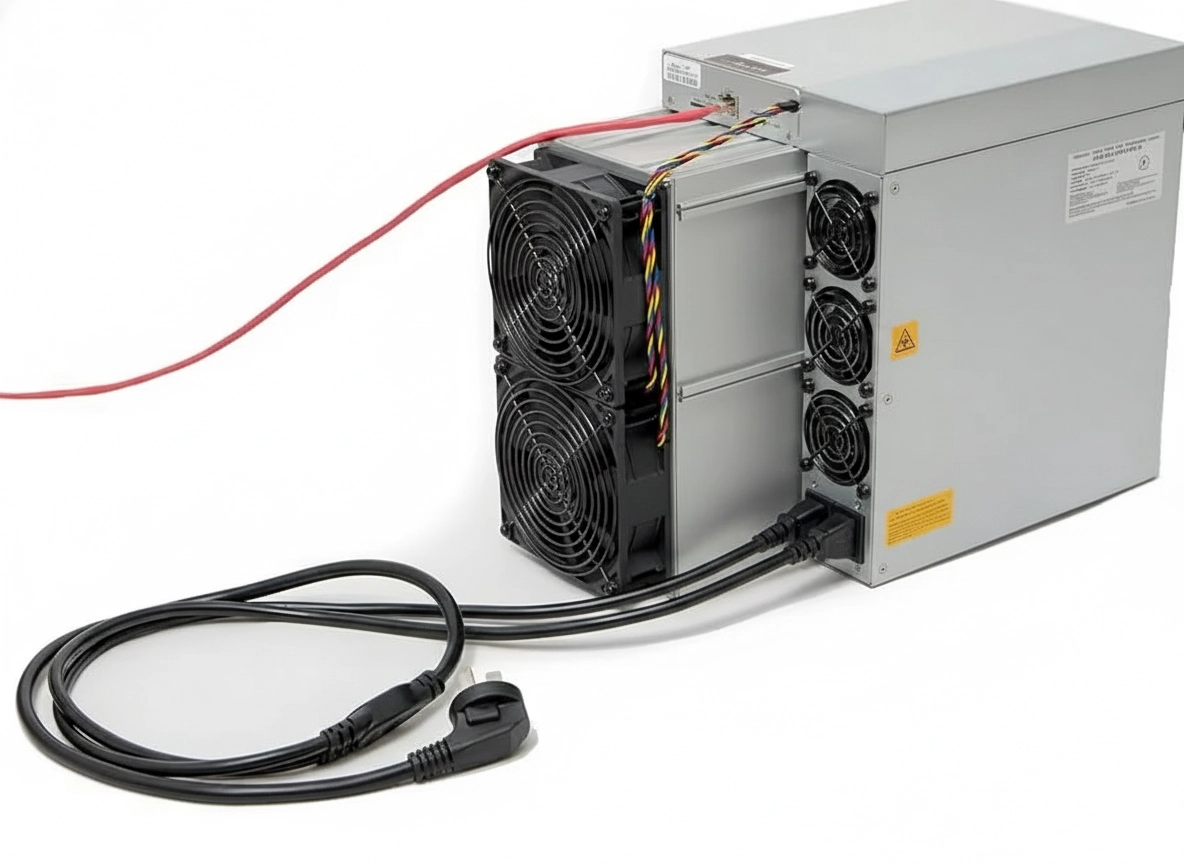
Application-Specific Integrated Circuits (ASICs) dominate Bitcoin mining through purpose-built efficiency. Modern ASICs deliver hashrates from 150-500 TH/s with power consumption ranging 3,000-7,000W. Key performance metrics include energy efficiency (measured in J/TH), hashrate capacity, and total cost of ownership including electricity expenses.

Mining Software Selection
Mining software bridges hardware to the Bitcoin network or mining pools. Popular options include CGMiner (command-line interface with advanced features), BFGMiner (modular FPGA/ASIC support), and EasyMiner (graphical interface for beginners). Software configuration requires pool URLs, worker credentials, and wallet addresses for reward distribution.
Infrastructure Requirements
Stable high-speed internet connectivity ensures uninterrupted blockchain communication and real-time data synchronization. Bandwidth requirements remain modest (typically under 100 MB/day), but reliability prevents costly mining disruptions. Professional operations implement redundant connections and uninterruptible power supplies (UPS) to maintain continuous uptime during network or power fluctuations.
Top ASIC Miners for 2025
Performance Leaders
The Bitmain Antminer S21 XP leads efficiency rankings with 270 TH/s at 3,645W consumption, achieving 13.5 J/TH efficiency. The Bitdeer Seal Miner A2 Pro Hydro pushes boundaries with 500+ TH/s through liquid cooling technology at 14.9 J/TH. The MicroBT Whatsminer M60S balances power with 186 TH/s at 17.5 J/TH, suitable for operations with moderate electricity costs.
Cost-Effective Options
The Canaan Avalon Made A1566 provides entry-level access with 150 TH/s at 3,225W (21.5 J/TH), offering lower upfront investment for smaller operations. The Bitmain Antminer S21 Pro delivers 234 TH/s at 3,510W with 15 J/TH efficiency, representing excellent mid-range value. Budget-conscious miners should calculate break-even periods based on local electricity rates and current Bitcoin prices.
2025 ASIC Miner Comparison Table
| Model | Hashrate | Power | Efficiency | Best For |
|---|---|---|---|---|
| Antminer S21 XP | 270 TH/s | 3,645W | 13.5 J/TH | Maximum efficiency operations |
| Seal Miner A2 Pro | 500+ TH/s | 7,450W | 14.9 J/TH | Industrial-scale liquid cooling |
| Whatsminer M60S | 186 TH/s | 3,255W | 17.5 J/TH | Balanced performance |
| Antminer S21 Pro | 234 TH/s | 3,510W | 15.0 J/TH | Mid-range profitability |
| Avalon A1566 | 150 TH/s | 3,225W | 21.5 J/TH | Budget entry point |
Mining Setup and Configuration
Hardware Installation Process
Begin by carefully unboxing and inspecting ASIC miners for shipping damage or loose components. Connect appropriate power supply units (PSUs) matching manufacturer specifications—typically 220-240V high-amperage circuits for industrial miners. Establish wired Ethernet connections for optimal stability, avoiding WiFi unreliability. Update firmware to latest versions before operational deployment, ensuring security patches and performance optimizations.
Pool Mining Configuration
Access miner web interface through IP address assignment, typically via DHCP or manual configuration. Enter mining pool URLs (F2Pool, Antpool, Foundry USA), worker identification credentials, and Bitcoin wallet address for payout distribution. Configure failover pools to maintain mining continuity during primary pool downtime. Test connections and monitor initial hashrate reporting before considering setup complete.
Solo Mining Configuration
Solo mining requires running Bitcoin Core full node, synchronizing the complete blockchain (currently 600+ GB). Configure ASIC connection details including full node IP address and RPC port (default 8332). Input Bitcoin wallet address for direct block reward reception. Understand that solo mining probability remains extremely low for individual operators—average block discovery could take years for single ASIC units.
Thermal Management and Cooling Solutions
Air Cooling Systems
Traditional air cooling utilizes high-velocity fans moving 200+ CFM (cubic feet per minute) through ASIC heat sinks. Effective deployment requires ambient temperatures below 35°C, dedicated ventilation infrastructure, and noise mitigation strategies. Industrial facilities implement hot aisle/cold aisle configurations, drawing cool air from one side while exhausting heated air (typically 60-75°C) through opposite channels.
Immersion Cooling Technology
Immersion cooling submerges ASICs in dielectric fluid (non-conductive liquid), achieving 95%+ heat transfer efficiency compared to 60% for air cooling. Fluids like 3M Novec or mineral oil absorb heat directly from components, enabling overclocking potential up to 20% without thermal throttling. Systems capture concentrated heat at 50-65°C, ideal for heat recovery applications including residential heating and industrial processes.
Hydro Cooling Systems
Liquid cooling circulates water or coolant through cold plates attached to ASIC chips, offering superior thermal conductivity versus air. Hydro systems reduce facility noise by 60-70%, eliminate dust contamination, and enable higher density installations. Heat exchangers transfer thermal energy to secondary systems for repurposing, making hydro cooling the preferred solution for operations prioritizing heat recovery and energy efficiency.
Revolutionary Heat Recovery Applications
District Heating Integration
Bitcoin mining facilities increasingly supply thermal energy to municipal district heating networks. Operations in Finland, Norway, and Canada pipe heated water (60-90°C) directly into residential and commercial heating systems. A single megawatt mining operation generates sufficient thermal energy to heat 40-60 average homes, creating dual revenue streams from Bitcoin rewards and heat energy sales.
Greenhouse Climate Control
Agricultural operations utilize mining heat for year-round crop production in cold climates. Bitcoin-heated greenhouses maintain optimal growing temperatures (18-24°C) without traditional heating costs, reducing operational expenses by 50-70%. Tomato, cucumber, and cannabis cultivation facilities report 15-20% production increases through consistent thermal management powered by mining infrastructure.
Residential Water Heating
Home-scale mining operations (1-5 ASICs) can provide domestic hot water heating through heat exchangers. Systems capture exhaust air heat or utilize liquid cooling loops to preheat water storage tanks, reducing conventional water heating costs by 30-50%. Small-scale implementations offer payback periods of 18-36 months when combining Bitcoin earnings with energy savings.
Heat Recovery ROI Comparison
| Application | Heat Capture Rate | Energy Value | ROI Period | Scalability |
|---|---|---|---|---|
| District Heating | 85-95% | $0.03-0.08/kWh | 2-4 years | High |
| Greenhouse Systems | 75-85% | $0.04-0.10/kWh | 1.5-3 years | Medium |
| Residential Water | 65-80% | $0.02-0.06/kWh | 1.5-3 years | Low |
| Industrial Process | 80-90% | $0.05-0.12/kWh | 1-2 years | High |
| Swimming Pool | 70-85% | $0.03-0.07/kWh | 2-3 years | Low |
Profitability Calculation and Considerations
Key Profitability Factors
Mining profitability depends on five critical variables: Bitcoin price (currently $102,000), network difficulty (adjusts every 2,016 blocks), electricity costs (profitable threshold typically $0.08-0.12/kWh), hardware efficiency (J/TH rating), and mining pool fees (1-3% of earnings). Daily revenue calculations require multiplying hashrate by current block rewards, minus operational expenses.
Break-Even Analysis
Calculate break-even timeframes by dividing total initial investment (hardware + infrastructure) by net monthly profits (mining revenue – electricity costs – pool fees). As of November 2025, efficient operations with electricity below $0.10/kWh achieve break-even within 12-18 months using latest-generation ASICs. Operations incorporating heat recovery reduce break-even periods by 20-40% through dual revenue streams.
Risk Management Strategies
Diversify mining portfolios across multiple cryptocurrencies using multi-algorithm miners. Hedge Bitcoin price volatility through DeFi lending platforms or hold partial reserves in stablecoins. Monitor network difficulty trends and adjust operational scaling accordingly. Consider geographic diversification to access varying electricity rates and regulatory environments. Implement regular hardware refresh cycles (24-36 months) to maintain competitive efficiency levels.
Regulatory and Environmental Considerations
Global Regulatory Landscape
Bitcoin mining regulations vary dramatically by jurisdiction. Russia legalized and regulated mining in 2023, establishing licensing frameworks and tax structures. United States applies state-level regulations with Texas, Wyoming, and Montana offering favorable environments. China maintains mining prohibitions since 2021, while Kazakhstan and Kazakhstan provide tax incentives. European Union implements sustainability requirements under Markets in Crypto-Assets (MiCA) regulations.
Sustainability and Carbon Impact
Mining operations using renewable energy produce only 36 gCO₂e/kWh compared to 690 gCO₂e/kWh from coal-powered setups. The industry’s renewable energy utilization reached 58.9% in 2025, substantially higher than global averages. Bitcoin mining increasingly serves as demand response resource, consuming excess renewable energy during peak production periods and curtailing consumption during grid stress events.
Future Industry Trends
Emerging developments include 3-nanometer ASIC chips promising 30% efficiency improvements, direct-to-chip liquid cooling enabling higher overclocking potentials, and AI-optimized mining algorithms dynamically adjusting operations for maximum profitability. Regulatory frameworks continue evolving toward fair competition requirements, decentralization incentives, and mandatory environmental disclosure standards. Heat recovery adoption accelerates as energy costs rise globally, transforming mining from pure consumption to productive energy utilization.
Getting Started with Miners1688
Why Choose Miners1688?
Miners1688 specializes in direct manufacturer sourcing from Bitmain, WhatsMiner, IceRiver, Avalon, and Goldshell, ensuring competitive pricing and authentic hardware. With 7 years of industry experience, our team provides expert guidance on equipment selection, profitability analysis, and operational optimization strategies tailored to your budget and electricity costs.
Comprehensive Support Services
We offer professional international shipping through DHL, UPS, and FedEx, plus specialized routes to Russia, Middle East, and North America. Our technical support team provides remote setup assistance, troubleshooting guidance, and ongoing maintenance support throughout your mining operation’s lifecycle. After-sales services include firmware updates, performance optimization, and warranty claim facilitation.
Featured Products for Heat Recovery
Explore our selection of liquid-cooling compatible ASICs including the Antminer S21 XP Hydro, WhatsMiner M66S Hydro, and Seal Miner A2 Pro—ideal for operations prioritizing heat recovery applications. We provide consultation on heat exchanger integration, facility design recommendations, and ROI calculations incorporating thermal energy value.
Visit Miners1688.com for current pricing, availability, and personalized mining solutions.
Frequently Asked Questions (FAQ)
Q: Is Bitcoin mining still profitable in November 2025? A: Yes, mining remains profitable with Bitcoin trading around $102,000. Operations with electricity costs below $0.10/kWh and modern ASICs (13-18 J/TH efficiency) generate positive returns. Heat recovery applications can boost profitability by 20-40% through dual revenue streams.
Q: How much electricity does a Bitcoin mining rig consume? A: Modern ASICs consume 3,000-7,000W per unit, or 72-168 kWh per day. A 100-unit facility draws approximately 500-700 kW continuously, similar to a small manufacturing plant. Heat recovery systems capture 70-95% of this energy as usable thermal power.
Q: What’s the best mining method for beginners? A: Pool mining offers the most accessible entry point, providing consistent smaller payouts without requiring full node infrastructure. Join established pools like F2Pool or Foundry USA with 1-2% fees. Start with 1-2 ASICs to learn operational requirements before scaling.
Q: Can I mine Bitcoin at home? A: Yes, but consider noise levels (70-85 dB), heat output (3-7 kW per unit), and electrical capacity requirements. Home mining works best with 1-3 ASICs in dedicated spaces with proper ventilation. Heat recovery for domestic water heating improves home mining economics significantly.
Q: How does heat recovery improve mining profitability? A: Heat recovery captures 70-95% of electrical energy as usable thermal power, creating secondary revenue through heating services or reducing facility costs. Operations report 20-40% profitability improvements, shortening break-even periods from 18 months to 12-14 months.
Q: What Bitcoin wallet should I use for mining rewards? A: Pool miners can use non-custodial lightweight wallets (Electrum, Exodus) or hardware wallets (Ledger, Trezor) for enhanced security. Solo miners require Bitcoin Core full node. Never use exchange wallets for mining rewards due to security risks and potential complications.
Q: How often do miners need replacement or upgrading? A: ASICs typically operate 24-36 months before efficiency deterioration or technological obsolescence requires upgrades. Well-maintained units in controlled environments may extend to 48+ months. Budget 25-30% of mining revenue for future hardware refresh cycles to maintain competitive operations.
Conclusion
Bitcoin mining in 2025 represents far more than cryptocurrency extraction—it’s become an innovative energy solution addressing renewable integration challenges and providing valuable thermal resources. Modern operations combining efficient ASICs, strategic heat recovery, and professional sourcing partnerships like Miners1688 transform mining from pure energy consumption into productive dual-purpose infrastructure. Whether starting small-scale residential operations or planning industrial facilities, success requires balancing hardware efficiency, electricity economics, and innovative thermal management. The future of profitable mining lies in viewing ASICs not just as computing devices, but as controllable heat sources generating digital and physical value simultaneously.
Start your mining journey today at Miners1688.com – Your trusted partner in cryptocurrency mining excellence.