
Summary: Despite Solana ETFs attracting $476M in consistent inflows since their October 2025 debut, SOL price has plummeted 20% from $205 to $165. This comprehensive analysis explores the divergence between institutional capital and market performance, revealing critical insights for cryptocurrency miners and investors navigating volatile market conditions.
The Solana ETF Launch: Initial Expectations vs Reality
When US-listed Solana spot ETFs launched on October 28, 2025, market participants anticipated a price surge similar to Bitcoin’s ETF-driven rally. However, the outcome has been paradoxical. While institutional money poured into these investment vehicles at an unprecedented rate, SOL’s price action told a completely different story.
Bitwise’s BSOL ETF emerged as the dominant player, attracting approximately $199 million in fresh capital during the first week alone. Combined with its $223 million in seed capital, BSOL established itself as a formidable competitor in the crypto ETF landscape. This level of institutional adoption would typically signal bullish momentum, yet SOL dropped from its pre-launch high of $205 to approximately $165 within just seven days.
The divergence raises fundamental questions about market mechanics, investor behavior, and the relationship between spot ETF products and underlying asset prices. For cryptocurrency mining professionals and hardware investors at Miners1688, understanding these dynamics is crucial for making informed decisions about equipment purchases and mining strategies during volatile market conditions.

Breaking Down the Numbers: ETF Performance Analysis
Institutional Capital Flow Patterns
According to CoinShares data, Solana-based exchange-traded products recorded their second strongest weekly inflow on record with $421 million. This figure is particularly impressive when compared to Bitcoin and Ethereum ETFs, which experienced significant outflows during the same period. Bitcoin ETFs saw modest demand as BTC prices slid approximately 6%, while Ethereum products faced even heavier redemptions with ETH falling 12%.
Market Share Distribution
The competitive landscape between BSOL and GSOL (Grayscale’s Solana Trust) reveals interesting insights into investor preferences. BSOL’s 0.20% management fee significantly undercut GSOL’s 0.35% fee structure, creating a clear value proposition for cost-conscious institutional investors. This pricing advantage, combined with first-mover benefits, explains BSOL’s dominant market position.
Grayscale’s GSOL, despite entering with $102 million in converted assets from its closed-end predecessor, attracted only $2.2 million in new inflows during the first week. This stark contrast highlights how fee structures and market timing influence institutional capital allocation decisions in the cryptocurrency ETF space.
Comparative Performance Metrics
K33’s head of research, Vetle Lunde, characterized the ETF launch as “very solid,” particularly noting the achievement against a backdrop of broader crypto market weakness. However, the disconnect between institutional enthusiasm and retail market sentiment has created unprecedented tension in SOL price discovery mechanisms.
Understanding the “Money In, Price Down” Paradox
Supply-Demand Dynamics in Crypto Markets
The traditional economic principle of supply and demand suggests that increased capital inflows should drive prices higher. However, cryptocurrency markets operate with unique characteristics that can produce counterintuitive outcomes. When institutional buyers purchase SOL through ETF vehicles, they’re not necessarily buying from the open market immediately. Market makers and authorized participants create ETF shares through complex arbitrage mechanisms that can temporarily decouple ETF demand from spot market prices.
Retail vs Institutional Behavior
CoinGlass data reveals a critical divergence: retail participation remains subdued since mid-October’s mass liquidation event. SOL’s futures Open Interest averaged $7.2 billion in November, down dramatically from $10 billion on November 1 and far below September’s $17 billion peak. This decline in speculative positioning indicates retail traders are either taking profits or reducing exposure, creating selling pressure that overwhelms institutional buying through ETFs.
Technical Factors Amplifying Downward Pressure
Stop-loss cascades and algorithmic trading strategies exacerbate price declines during volatile periods. As SOL broke through key support levels around $180, automated selling triggered additional liquidations, creating a negative feedback loop. The 50-day EMA at $173 and 200-day EMA at $180 now act as resistance levels, capping recovery attempts and reinforcing bearish sentiment among technical traders.
Solana ETF Comparison: Fee Structures and Performance
| ETF Product | Management Fee | Week 1 Inflows | Total AUM | Key Advantage |
|---|---|---|---|---|
| Bitwise BSOL | 0.20% | $199M | $422M+ | Lowest fees, first-mover advantage |
| Grayscale GSOL | 0.35% | $2.2M | $104M+ | Established brand, converted assets |
| Fidelity FSOL | 0.25% | $5M | Undisclosed | Institutional trust, broader distribution |
Note: Data reflects first two weeks post-launch, November 2025
Implications for Cryptocurrency Mining Operations
Strategic Equipment Investment Timing
For mining professionals sourcing hardware from suppliers like Miners1688, the current market divergence presents both challenges and opportunities. Price volatility impacts mining profitability calculations, requiring careful analysis of when to deploy capital for new equipment purchases.
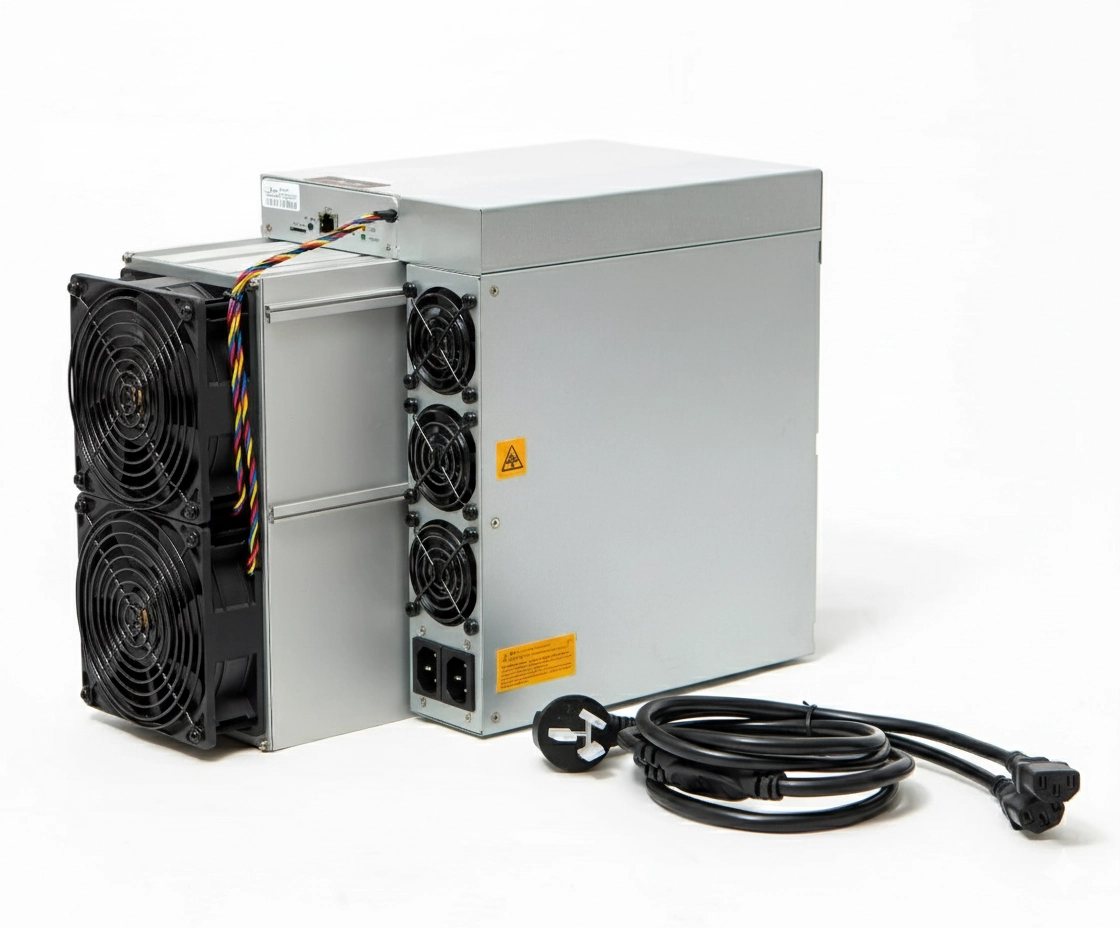
The Bitmain Antminer S21+ represents current-generation efficiency standards for Bitcoin mining, delivering optimal performance during uncertain market conditions. While Solana isn’t directly mineable through Proof-of-Work mechanisms, broader cryptocurrency market trends influence overall mining economics and investor sentiment toward blockchain infrastructure investments.
Diversification Across Mining Portfolios
Smart mining operations maintain diversified portfolios across multiple cryptocurrencies and algorithms. Products like the Bitmain Antminer L9 for Dogecoin/Litecoin mining and the Canaan Avalon Q for Bitcoin operations provide risk mitigation during periods of single-asset volatility.
Electricity Cost Considerations
Current market conditions make power efficiency paramount. The GoldShell AE Max II demonstrates how specialized mining equipment can target emerging blockchain networks with potentially favorable economics. During periods of price suppression, only the most efficient operations maintain profitability margins.
Technical Analysis: SOL Price Outlook
Key Resistance and Support Levels
SOL currently trades above $141, testing critical support zones established during the November downturn. The descending trendline from September’s $261 peak creates a technical ceiling limiting upside momentum. Immediate resistance appears around $160-$166, where the broken rising support from $125 now functions as overhead supply.
Moving Average Convergence
The 50-day EMA at $173 and 200-day EMA at $180 form a resistance cluster that has consistently rejected recovery attempts. This moving average convergence creates a “death cross” pattern traditionally associated with prolonged bearish trends. Breaking above this zone requires substantial buying volume—potentially from sustained ETF inflows finally translating into spot market purchases.
Momentum Indicators Signal
The MACD indicator shows improving conditions, moving toward the zero line after extended negative territory. This suggests fading bearish pressure rather than imminent reversal. The RSI at 38 remains below the neutral 50 midline, indicating subdued momentum but also approaching oversold conditions where bounce potential increases.
For the bullish case to strengthen, RSI must reclaim the 50 level and sustain above it, while MACD generates a positive crossover. These technical conditions would align with fundamental improvements like recovering futures Open Interest and continued ETF inflows to create a more constructive price environment.
Mining Profitability During Market Volatility
Current Mining Economics
As of November 2025, Bitcoin mining profitability stands at approximately 0.0000004128 BTC per terahash per day. At current network difficulty and energy costs, only the most efficient ASIC miners maintain positive margins. This underscores the importance of selecting cutting-edge equipment from reliable suppliers.
Hardware Efficiency Rankings
Modern mining operations require equipment achieving at least 15-20 J/TH efficiency ratios to remain competitive. The latest generation machines like the Antminer S21 series and Canaan Avalon products available at Miners1688 meet these stringent requirements, providing the technological edge necessary during challenging market conditions.
ROI Calculations in Uncertain Markets
Miners must account for price volatility when projecting return on investment timelines. Equipment purchases made during price suppression can yield favorable outcomes if positions are maintained through recovery cycles. However, this strategy requires adequate capital reserves to weather extended downturns without forced liquidation.

Top ASIC Miners for Current Market Conditions (2025)
| Model | Hashrate | Power | Efficiency | Best For | Availability |
|---|---|---|---|---|---|
| Bitmain Antminer S21+ | 270 TH/s | 3645W | 13.5 J/TH | Bitcoin mining professionals | In Stock |
| Canaan Avalon Q | 90 TH/s | 1674W | 18.6 J/TH | Home mining operations | In Stock |
| Bitmain Antminer L9 | 16 GH/s | 3360W | 210 J/MH | Scrypt algorithm (LTC/DOGE) | In Stock |
| Elphapex DG2+ | 20.5 GH/s | 3900W | 190 J/MH | High-volume Scrypt mining | Limited Stock |
| GoldShell AE Max II | 540 MH/s | 3200W | 5.9 J/MH | Aleo network mining | Pre-order |
Performance metrics based on manufacturer specifications; actual results vary by environment
Future Outlook: When Will ETF Inflows Impact Price?
Historical Precedents
Bitcoin’s ETF launch in January 2024 provides instructive comparison. Initial price action was volatile, with BTC experiencing significant swings before establishing a sustained uptrend months after ETF approval. The delayed price response reflected market digestion of new supply dynamics and institutional positioning strategies that played out over quarters rather than weeks.
Solana Ecosystem Developments
Beyond ETF mechanics, Solana’s fundamental value proposition continues evolving. The network’s high-throughput capabilities, growing DeFi ecosystem, and NFT marketplace activity provide underlying support for long-term price appreciation. However, these fundamental strengths may take time to override short-term technical and sentiment-driven selling pressure.
Institutional Adoption Timeline
Major institutional investors operate on extended decision-making timelines. The initial $476 million in ETF inflows represents early adopters and existing crypto-familiar institutions. Broader pension funds, endowments, and traditional asset managers typically require 6-12 months of performance history before meaningful allocations. This suggests potential for sustained inflow growth into 2026, which could eventually translate into spot market buying pressure.
Risk Management for Mining Investors
Hedging Strategies
Professional mining operations implement hedging strategies to protect against price volatility. This includes forward selling portions of mined cryptocurrency, using options contracts for downside protection, and maintaining diversified revenue streams across multiple blockchain networks. Equipment suppliers like Miners1688 support these strategies by offering rapid deployment of hardware targeting the most profitable mining opportunities at any given time.
Capital Preservation
During uncertain market phases, preserving capital takes priority over aggressive expansion. This means prioritizing the most efficient equipment, negotiating favorable electricity contracts, and maintaining adequate liquidity to sustain operations through extended downturns. The mining industry’s cyclical nature rewards operators who survive difficult periods to capitalize on subsequent recovery phases.
Geographic Diversification
Regulatory uncertainty varies significantly across jurisdictions. Mining operations benefit from geographic diversification to mitigate single-country regulatory risks. Miners1688’s global shipping capabilities facilitate this strategy, delivering equipment to optimal locations worldwide with professional logistics support and customs expertise.
The Broader Cryptocurrency Market Context
Correlation with Bitcoin and Ethereum
While Solana demonstrates some price independence, major cryptocurrencies remain correlated during significant market moves. Bitcoin’s current sideways trading around $83,000 and Ethereum’s struggle near $2,700 create headwinds for all altcoins. A sustained BTC rally would likely lift SOL regardless of ETF-specific dynamics, while further crypto-wide weakness could override positive ETF inflow momentum.
Macroeconomic Factors
Interest rate policies, inflation data, and traditional market performance influence cryptocurrency valuations. The US Federal Reserve’s monetary policy stance affects risk asset appetite generally, with cryptocurrencies typically behaving as high-beta plays on liquidity conditions. Mining profitability calculations must incorporate these macro variables alongside crypto-specific factors.
Regulatory Environment
The successful launch of Solana ETFs represents regulatory progress, suggesting increasing acceptance of cryptocurrency investment products by traditional finance gatekeepers. This regulatory clarification provides long-term bullish underpinning, even as short-term price action remains choppy. Continued regulatory evolution will shape both ETF product development and broader cryptocurrency adoption trajectories.

Frequently Asked Questions (FAQ)
Q: Why is SOL price falling despite strong ETF inflows? A: The divergence stems from multiple factors including retail selling pressure, reduced futures Open Interest, technical stop-loss cascades, and delayed transmission of institutional buying to spot markets. ETF purchases don’t immediately create spot market demand due to market maker hedging mechanisms.
Q: How long until ETF inflows impact SOL price positively? A: Historical precedents suggest 3-6 months for institutional capital flows to meaningfully influence underlying asset prices. Bitcoin’s ETF experience indicates delayed but eventually significant positive price impact as institutional adoption broadens.
Q: Should miners buy equipment during price suppression? A: Counter-cyclical equipment purchases can yield favorable returns if operations maintain liquidity through downturns. However, only acquire the most efficient hardware like the Bitmain S21 series to ensure profitability at current network difficulty and energy costs.
Q: What makes Bitwise’s BSOL more popular than Grayscale’s GSOL? A: BSOL’s 0.20% management fee versus GSOL’s 0.35% creates significant cost savings over time. Combined with first-mover advantage and established Bitwise reputation in crypto ETF products, BSOL captured dominant market share.
Q: Are cryptocurrency mining operations still profitable in November 2025? A: Profitability depends on electricity costs, equipment efficiency, and operational scale. Modern ASIC miners achieving sub-15 J/TH efficiency remain profitable at most industrial electricity rates. Home mining requires careful economic analysis given current network difficulty levels.
Q: How do I choose the right mining hardware supplier? A: Prioritize suppliers offering authentic manufacturer equipment, transparent pricing, professional logistics, and technical support. Miners1688 provides these services with seven years industry experience, direct manufacturer relationships, and comprehensive after-sales support.
Q: What are the best cryptocurrencies to mine right now? A: Bitcoin remains the most stable option for large operations. Litecoin and Dogecoin (Scrypt algorithm) offer alternatives through efficient miners like the Antminer L9. Emerging networks like Kaspa and Alephium provide speculative opportunities for risk-tolerant miners.
Conclusion: Navigating the Divergence
The Solana ETF paradox—strong inflows alongside weak prices—illustrates the complex relationship between institutional capital and cryptocurrency market dynamics. For mining professionals and equipment investors, this environment demands careful analysis, risk management, and strategic timing.
The current market volatility creates opportunities for well-capitalized operators to acquire efficient mining equipment at potentially favorable entry points. By partnering with established suppliers like Miners1688 and focusing on cutting-edge hardware efficiency, mining operations can position themselves to capitalize on eventual price recovery while maintaining profitability through uncertain periods.
As institutional adoption continues through ETF vehicles and Solana’s ecosystem matures, the fundamental case for long-term appreciation strengthens. However, short-term volatility will likely persist, requiring disciplined risk management and patient capital deployment strategies. The miners who survive and thrive through these challenging periods will be those who combine operational excellence with strategic foresight.
References: