
Summary: Understanding who’s investing in cryptocurrency mining infrastructure—whether long-term institutional players or short-term retail traders—is crucial for miners and equipment buyers in late 2025. This analysis examines capital flow patterns, holder behavior, and investment stickiness in the evolving mining landscape.
The New Mining Investment Paradigm: Who’s Buying the Hashrate?
The cryptocurrency mining industry in late 2025 mirrors many dynamics seen in traditional financial markets, particularly the recent ETF boom. Just as ETF investors can be categorized by their holding behavior, mining equipment buyers and hashrate investors exhibit distinct patterns that reveal the health and stability of the mining ecosystem.
According to recent data from Hashrate Index, the Bitcoin network hashrate has stabilized around 1.06-1.14 ZH/s (zettahash per second) in November 2025, down from mid-November peaks. This fluctuation raises critical questions: Are current mining investments driven by structural, long-term capital or speculative, short-term traders chasing quick profits?

The answer matters enormously for miners considering equipment purchases. When examining products like the Bitmain Antminer S21+ or Canaan Avalon Q, understanding whether the mining market attracts sticky, patient capital or volatile, momentum-driven traders can inform ROI projections and purchase timing.
Institutional vs. Retail: The Mining Equipment Buyer Profile
Large-Scale Mining Operations: The Institutional Players
Major mining companies operate with multi-year investment horizons, seeking efficiency and operational leverage. These players typically:
- Purchase equipment in bulk (50-500+ units)
- Focus on energy efficiency metrics (J/TH ratios)
- Negotiate long-term power purchase agreements
- Hold mined Bitcoin rather than immediately selling
Bloomberg reports that retail investors hold the majority of spot Bitcoin ETF assets as of November 2025, but in the mining sector, the pattern differs significantly. Large institutional miners like those operating 20+ EH/s facilities represent stable, structural demand for premium equipment.
Retail and Small-Scale Miners: The Flexible Traders
Small-scale mining operations (1-20 machines) tend to exhibit more volatile behavior:
- Sensitive to short-term price fluctuations
- Higher likelihood of equipment resale during market downturns
- Focus on immediate profitability metrics
- More likely to switch between different coins
This bifurcation creates distinct market segments. Products like the Bitmain Antminer L9 Dogecoin Miner appeal to retail miners seeking diversification, while the S21 XP series targets institutional-grade operations.
The “Sticky Money” Indicator for Mining
In ETF markets, “sticky money” refers to capital that remains invested through market cycles. For mining, the equivalent metric is hashrate persistence—the tendency of miners to keep equipment running despite profitability fluctuations.
Current data from November 2025 shows concerning trends: Bitcoin miners have offloaded over 30,000 BTC within 48 hours earlier this month, pushing reserves to record lows as hashprice collapsed to multi-month lows around $43.1 per PH/s. This suggests increasing numbers of operators are acting as “weak hands” rather than committed long-term participants.
Capital Flow Quality: What Current Trends Reveal
The Hashprice Collapse Signal
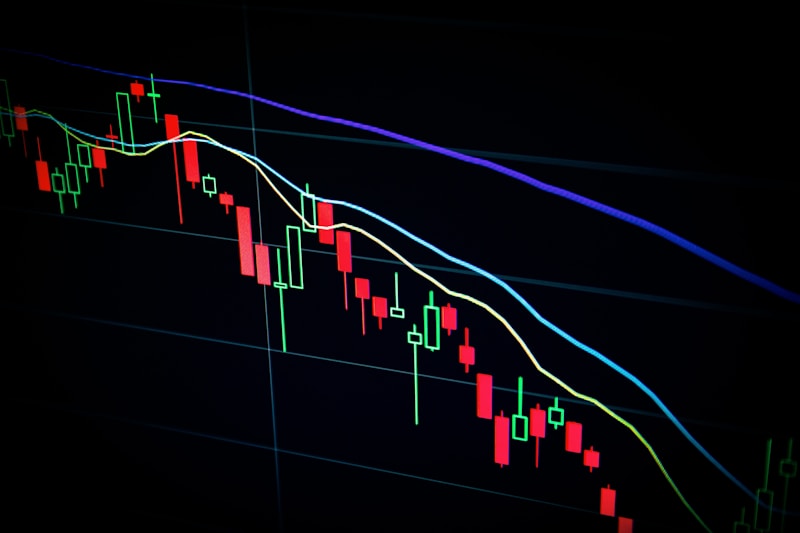
The dramatic decline in hashprice (revenue per unit of hashpower) in November 2025 serves as a stress test for capital quality. Mining operations built on solid financial foundations with low energy costs (below $0.06/kWh) continue operating profitably, while highly leveraged or inefficient operations face shutdown scenarios.
Equipment Purchase Patterns as Flow Indicators
Mining equipment sales data provides insight into capital flow quality:
Strong Indicators (Sticky Capital):
- Consistent orders for latest-generation equipment like the Antminer S21 XP+ Hyd (500Th)
- Bulk purchases with delivery schedules extending 3-6 months
- Orders accompanied by infrastructure investments (facility expansion, power upgrades)
Weak Indicators (Hot Money):
- Focus on cheapest available equipment regardless of efficiency
- Small, frequent orders without clear operational strategy
- Immediate resale of equipment during minor price corrections
Geographic Distribution and Capital Stability
The United States continues leading global hashrate distribution with approximately 40% of the network, followed by Kazakhstan at 14%. This geographic concentration of mining in regions with mature regulatory frameworks generally correlates with more stable, institutional capital.
Mining Equipment Selection: Matching Capital Strategy to Hardware
| Equipment Tier | Target Investor | Capital Type | Typical Holding Period | Risk Profile |
|---|---|---|---|---|
| Premium Efficiency (S21 XP+, M66S) |
Institutional miners, mining funds | Structural, sticky capital | 24-36 months | Low-Medium |
| Standard Flagship (S21, S21 Pro) |
Medium-scale operations | Semi-stable capital | 12-24 months | Medium |
| Alternative Coins (L9, KS7, ICERIVER) |
Diversified retail miners | Opportunistic capital | 6-18 months | Medium-High |
| Entry-Level/Used (Previous generation) |
Speculative miners | Hot money, weak hands | 3-12 months | High |
The Efficiency-First Strategy for Stable Returns
For miners seeking to emulate institutional “sticky capital” approaches, prioritizing efficiency over raw hashrate often delivers superior long-term outcomes. The Elphapex DG2+ LTC/DOGE miner exemplifies this principle in alternative coin mining, offering 20.5 GH/s at 3900W—a competitive efficiency profile that remains profitable through market volatility.
Diversification: The Institutional Mining Portfolio Approach
Sophisticated mining operations diversify across:
- Primary Bitcoin miners (70-80% of capacity): Antminer S21 series
- Alternative coin miners (10-20%): Goldshell AE Max II for Aleo
- Emerging algorithm miners (5-10%): Kaspa, Nervos, and other proof-of-work chains
This approach mirrors institutional ETF portfolios that balance core holdings with tactical allocations, creating more resilient revenue streams that withstand single-coin volatility.
Capital Preservation Through Strategic Timing
The November 2025 market conditions—with hashprice near lows and network hashrate declining—actually represent opportunity for well-capitalized miners. Institutional players recognize that equipment purchased during pessimistic periods often delivers the strongest ROI as:
- Hardware prices decrease during market downturns
- Difficulty adjustments gradually improve profitability
- Less efficient competitors exit, reducing network competition
Network Health Indicators: Reading Between the Hashrate Lines

The 7-Day SMA as a Capital Flow Proxy
The Bitcoin network’s 7-day simple moving average hashrate dropped from 1,120 EH/s to 1,056 EH/s in early November 2025—a 5.7% decline—before recovering to 1,127 EH/s by mid-November (a 6.7% increase). These swings indicate significant miner turnover, suggesting capital instability among marginal operators.
For equipment buyers, this volatility creates opportunities. When weaker operators exit (selling equipment or shutting down), network difficulty adjusts downward, improving profitability for remaining miners using efficient hardware.
Miner Reserve Behavior as a Sentiment Indicator
Bitcoin miner reserves plunging to record lows (with 30,000+ BTC sold in 48 hours in November 2025) reveals widespread financial pressure. However, this isn’t uniformly negative—it represents capitulation by leveraged or inefficient miners while well-positioned operators accumulate at favorable prices.
For prospective mining equipment buyers, this environment demands:
- Conservative leverage: Avoid debt-financed equipment purchases
- Energy cost discipline: Only proceed with sub-$0.08/kWh electricity costs
- Adequate capital reserves: Maintain 6-12 months of operational expenses
- Premium equipment selection: Choose efficiency leaders like the S21 XP series
Pool Concentration and Capital Flow Patterns
Major mining pool hashrate distribution in 2025 shows:
- Foundry USA Pool: 277 EH/s (largest)
- Antpool: 146 EH/s
- ViaBTC: 120 EH/s
- F2Pool: 77 EH/s
The dominance of established pools suggests institutional mining operations (who typically use these pools) maintain significant market presence despite retail exodus. This concentration of hashrate among professional operators indicates the mining industry is maturing beyond its speculative origins.
Investment Thesis: Building for the Next Cycle
| Market Condition | Capital Flow Character | Recommended Action | Equipment Focus | Expected Outcome |
|---|---|---|---|---|
| Late 2025 (Current) | Weak hands exiting, institutions accumulating | Strategic purchases of premium equipment | S21 XP+, M66S, newest generation | Superior ROI over 24-36 months |
| Early 2026 Projected | Network stabilization, difficulty normalization | Continue buildout at prevailing prices | Balanced portfolio approach | Steady cash flow generation |
| Mid-Late 2026 Projected | Potential retail re-entry if prices rally | Maintain operations, consider equipment sales | Hold premium efficiency units | Maximize profits from improved conditions |
| 2027+ Long-term | Mature market with institutional dominance | Continuous efficiency optimization | Next-generation equipment as released | Sustainable mining operation |
The Case for Counter-Cyclical Investment
History shows that mining equipment purchased during market despair often delivers exceptional returns. The current November 2025 environment—characterized by:
- Hashprice at multi-month lows
- Miner capitulation and reserve drawdowns
- Network hashrate volatility
- Negative market sentiment
—mirrors conditions seen before previous major rallies. Miners with sufficient capital to weather current conditions position themselves advantageously for eventual market recovery.
ROI Modeling: Realistic Expectations for 2025-2026
Conservative ROI projections for premium equipment purchases in late 2025:
Antminer S21 XP (270 TH/s) Example:
- Equipment cost: ~$4,500
- Power consumption: 3,900W
- Electricity cost: $0.06/kWh
- Current daily revenue: ~$8-12 (highly variable)
- Current daily electricity cost: ~$5.60
- Net daily profit: $2.40-6.40
At these rates, payback period extends to 24-36+ months, requiring belief in:
- Bitcoin price appreciation over investment horizon
- Network difficulty stabilization or modest decline
- Operational continuity without major equipment failures
The Institutional Advantage: Scale and Efficiency
Large mining operations achieve structural advantages that retail miners cannot replicate:
- Power costs: Institutional miners negotiate rates 30-50% below retail
- Equipment pricing: Bulk purchases reduce per-unit costs by 10-20%
- Operational efficiency: Professional facility management reduces downtime
- Capital access: Lines of credit enable opportunistic expansion
However, retail and small-scale miners can compete by:
- Utilizing surplus residential solar capacity
- Heating applications (using mining heat productively)
- Geographic arbitrage (relocating to low-cost power regions)
- Strategic timing of equipment purchases
Risk Management: Protecting Capital in Volatile Markets
Diversification Beyond Bitcoin Mining
The concentration risk of Bitcoin-only mining operations became apparent during November 2025’s hashprice collapse. Miners with diversified equipment portfolios fared better:
- Litecoin/Dogecoin miners: Elphapex DG2+ continued profitable operation
- Alternative coin miners: Kaspa, Aleo, and other chains maintained better profitability ratios
- Multi-algorithm operations: Flexibility to shift resources to most profitable coins
This portfolio approach transforms mining from a single-asset bet into a diversified cryptocurrency production business.
Operational Hedging Strategies
Advanced mining operations implement hedging strategies:
- Hash rate derivatives: Locking in future profitability through contracts
- Equipment resale planning: Maintaining relationships with secondary market buyers
- Power contract flexibility: Negotiating variable-rate agreements with minimum commitments
- Bitcoin accumulation targets: Setting specific reserve goals before liquidating mined coins
The Capital Preservation Mindset
Institutional mining operations prioritize capital preservation over aggressive growth during uncertain market phases. This translates to:
- Avoiding debt-financed expansion during market volatility
- Maintaining 12+ months of operational reserves
- Focusing on efficiency improvements over capacity additions
- Strategic opportunistic buying when equipment prices collapse
Retail miners can adopt these principles by:
- Never leveraging home equity or personal debt for mining equipment
- Starting with 1-3 units rather than over-committing capital
- Selecting proven equipment from reputable suppliers like Miners1688
- Planning for worst-case scenarios (extended profitability downturns)
Equipment Selection Framework: Quality Over Quantity
The Efficiency Frontier in Late 2025
Current-generation equipment defines the efficiency frontier:
Bitcoin Mining:
- Best-in-class: Antminer S21 XP+ Hyd (500Th at 5,500W = 11 J/TH)
- Strong performers: Antminer S21 XP (270Th at 3,900W = 14.4 J/TH)
- Standard tier: Antminer S21 (200Th at 3,500W = 17.5 J/TH)
Alternative Coins:
- Litecoin/Dogecoin: Elphapex DG2+ (20.5 GH/s at 3,900W)
- Aleo: Goldshell AE Max II (540MH at 3,200W)
For miners making purchasing decisions in November 2025, prioritizing efficiency over raw hashrate becomes crucial as:
- Network difficulty remains elevated
- Hashprice struggles to recover
- Energy costs represent growing operational percentage
New vs. Used Equipment Considerations
The secondary market for mining equipment has grown substantially, but buyers must weigh tradeoffs:
New Equipment Advantages:
- Full manufacturer warranty (typically 180 days)
- Maximum operational lifespan remaining
- Latest efficiency standards
- Stable performance characteristics
Used Equipment Risks:
- Unknown operational history (overclocking, poor maintenance)
- Reduced remaining lifespan
- Potential hidden defects
- Warranty limitations or voiding
In the current market environment, purchasing new equipment from established suppliers like Miners1688 provides peace of mind and long-term reliability that justifies the premium over used hardware.
The Total Cost of Ownership Calculation
Smart miners evaluate total cost of ownership (TCO) rather than just purchase price:
TCO Components:
- Equipment purchase price
- Shipping and import duties
- Installation and infrastructure (power distribution, cooling, racking)
- Electricity costs (projected over 24-36 months)
- Maintenance and replacement parts
- Downtime and operational issues
A $4,000 efficient miner may deliver better 36-month TCO than a $2,500 inefficient unit when electricity costs are factored across the full operational period.
Market Outlook: Navigating the 2025-2026 Transition
Short-Term Headwinds (Q4 2025 – Q1 2026)
The mining industry faces several near-term challenges:
- Hashprice pressure: Currently at multi-month lows around $43/PH/s
- Network difficulty: Remains elevated despite recent modest decreases
- Miner capitulation: Ongoing sell pressure from marginal operators
- Bitcoin price uncertainty: Volatility creating unpredictable revenue
These conditions favor well-capitalized miners who can endure temporary unprofitability while maintaining operations.
Medium-Term Opportunities (Q2-Q4 2026)
Several factors could improve mining economics:
- Difficulty adjustments: Continued miner exits would lower network difficulty
- Equipment price declines: Market consolidation driving competitive pricing
- Energy innovation: Growing renewable energy integration reducing operational costs
- Market maturation: Institutional adoption providing capital stability
Miners who establish operations during the current challenging period position themselves for potential outsized gains if conditions improve.
Long-Term Industry Evolution (2027+)
The mining industry continues evolving toward:
- Institutional dominance: Professional operations with 20+ EH/s capacity
- Geographic consolidation: Concentration in low-cost power regions
- Vertical integration: Miners owning power generation assets
- Financial sophistication: Hedging, derivatives, and treasury management
Retail and small-scale miners will increasingly need to specialize—finding niche advantages through:
- Unique power sources (stranded gas, excess renewable generation)
- Hybrid business models (heating, compute services)
- Alternative coins with lower competition
- Geographic advantages (favorable regulations, climate)
Actionable Recommendations for Mining Equipment Buyers
For Institutional and Large-Scale Operators
Immediate Actions (Q4 2025):
- Opportunistic equipment acquisition: Current market conditions favor bulk purchases of premium efficiency miners
- Power contract renegotiation: Lock in favorable long-term electricity rates
- Infrastructure optimization: Invest in cooling and power distribution improvements
- Treasury management: Develop Bitcoin holding strategies rather than immediate liquidation
Strategic Positioning:
- Target equipment portfolio of 80% premium efficiency units (S21 XP series)
- Maintain 12-18 months operational reserves
- Develop relationships with equipment suppliers for priority access to next-generation hardware
- Consider vertical integration opportunities (power generation, facility ownership)
For Retail and Small-Scale Miners
Immediate Actions:
- Conservative entry or expansion: Purchase 1-3 units of proven equipment like the Antminer S21
- Energy cost verification: Ensure electricity costs below $0.08/kWh for profitability
- Infrastructure preparation: Install adequate cooling and electrical capacity
- Pool selection: Join established pools like Foundry USA, Antpool, or F2Pool
Risk Management:
- Never leverage debt for equipment purchases
- Start small and scale based on actual profitability
- Maintain 6+ months operating reserves
- Plan exit strategy if profitability deteriorates
For Alternative Coin Miners
Strategic Opportunities:
- Litecoin/Dogecoin: Bitmain Antminer L9 offers stable alternative to Bitcoin mining
- Kaspa: Growing network with favorable profitability metrics
- Aleo: Emerging zero-knowledge proof chain with institutional backing
Diversification Benefits: Alternative coin mining reduces exposure to Bitcoin-specific risks while maintaining cryptocurrency production capabilities. The Elphapex DG2+ exemplifies equipment targeting this diversification strategy.
FAQ: Mining Capital Flows and Equipment Investment
Q1: How do I determine if current mining investment represents “sticky capital” or “hot money”?
A: Examine several indicators: (1) Equipment purchasing patterns—bulk orders with long delivery schedules suggest institutional commitment; (2) Network hashrate stability—persistent hashrate despite price declines indicates sticky capital; (3) Miner reserve behavior—accumulation during downturns signals confidence, while rapid selling suggests weak hands. In November 2025, we’re seeing mixed signals with institutional accumulation occurring alongside retail capitulation.
Q2: What’s the minimum electricity cost needed for profitable Bitcoin mining in late 2025?
A: With current hashprice around $43/PH/s and network conditions in November 2025, miners need electricity costs below $0.06/kWh to achieve strong profitability with premium equipment like the Antminer S21 XP. Costs between $0.06-$0.08/kWh allow marginal profitability, while anything above $0.08/kWh creates challenging economics requiring belief in near-term Bitcoin price appreciation.
Q3: Should I buy mining equipment during the current market downturn?
A: Counter-cyclical equipment purchases often deliver superior long-term returns, but only if you have: (1) Sufficient capital to weather 12-24 months without positive cash flow; (2) Access to low-cost electricity (sub-$0.06/kWh); (3) No debt leverage on the investment; (4) Long-term conviction in cryptocurrency value proposition. If these conditions are met, current market conditions (November 2025) present opportunity. Otherwise, wait for improved profitability conditions.
Q4: What’s the expected ROI timeline for mining equipment purchased in late 2025?
A: Conservative estimates suggest 24-36 month payback periods for premium equipment like the Antminer S21 series under current conditions. This assumes: (1) Stable or modestly improving Bitcoin prices; (2) Network difficulty remaining elevated but not increasing dramatically; (3) Continued operation without major equipment failures; (4) Electricity costs below $0.06/kWh. More aggressive scenarios assuming Bitcoin price appreciation could reduce payback to 12-18 months.
Q5: How does alternative coin mining compare to Bitcoin mining in the current environment?
A: Alternative coin mining (Litecoin, Dogecoin, Kaspa, etc.) currently offers more stable profitability than Bitcoin mining for many operators. Equipment like the Bitmain Antminer L9 or Elphapex DG2+ maintains better profit margins due to: (1) Lower network difficulty competition; (2) More stable hashprice; (3) Less institutional dominance. However, these markets have lower liquidity and higher cryptocurrency price volatility.
Q6: What are the warning signs that mining capital is becoming unstable?
A: Key warning indicators include: (1) Rapid network hashrate declines (5%+ within days); (2) Miner reserve drawdowns (large Bitcoin sales by mining companies); (3) Secondary market flooding with used equipment; (4) Mining pool hashrate volatility; (5) Hashprice approaching operational costs for efficient miners. November 2025 exhibited several of these signals, suggesting capital instability among marginal operators while institutional players remain committed.
Q7: How important is equipment brand and supplier reputation?
A: Extremely important for long-term success. Reputable manufacturers (Bitmain, Whatsminer, Canaan) offer: (1) Reliable performance matching specifications; (2) Warranty support and replacement parts availability; (3) Established service networks; (4) Higher resale value. Similarly, working with established suppliers like Miners1688—with seven years of industry experience—ensures: authentic equipment, competitive pricing, professional logistics, and post-sale technical support.
Q8: Should I prioritize hashrate or efficiency when selecting mining equipment?
A: In the current market environment (November 2025), efficiency absolutely trumps raw hashrate. Equipment with superior J/TH (joules per terahash) ratings remains profitable through market volatility, while less efficient high-hashrate machines become money losers when Bitcoin prices decline. The Antminer S21 XP at 14.4 J/TH significantly outperforms older 30+ J/TH equipment despite lower raw hashrate.
Conclusion: Building Resilient Mining Operations in Uncertain Markets
The parallels between ETF capital flows and cryptocurrency mining investment patterns reveal fundamental truths about market stability. Just as ETF markets face challenges when dominated by hot money and weak hands, mining ecosystems struggle when operated primarily by leveraged speculators rather than committed long-term participants.
The November 2025 mining landscape presents both challenges and opportunities. Current conditions—characterized by hashprice compression, network volatility, and miner capitulation—test the conviction and financial stability of all market participants. However, these same conditions create asymmetric opportunities for well-capitalized miners who approach equipment investment with institutional discipline.
For prospective mining equipment buyers, the lesson is clear: emulate institutional “sticky capital” approaches rather than speculative “hot money” behavior. This means:
- Conservative capital deployment without leverage
- Premium efficiency equipment from reputable suppliers like Miners1688
- Long-term investment horizons (24-36+ months)
- Adequate operational reserves for market volatility
- Strategic diversification across coins and algorithms
The miners who thrive through 2026 and beyond will be those who recognize that cryptocurrency mining is increasingly an industrial business requiring professional capital allocation, operational excellence, and strategic patience—not a speculative lottery ticket offering quick riches.
As the industry matures, the distinction between structural, sticky capital and transient, speculative flows will only grow more important. Position yourself accordingly.
Related Links & Resources: